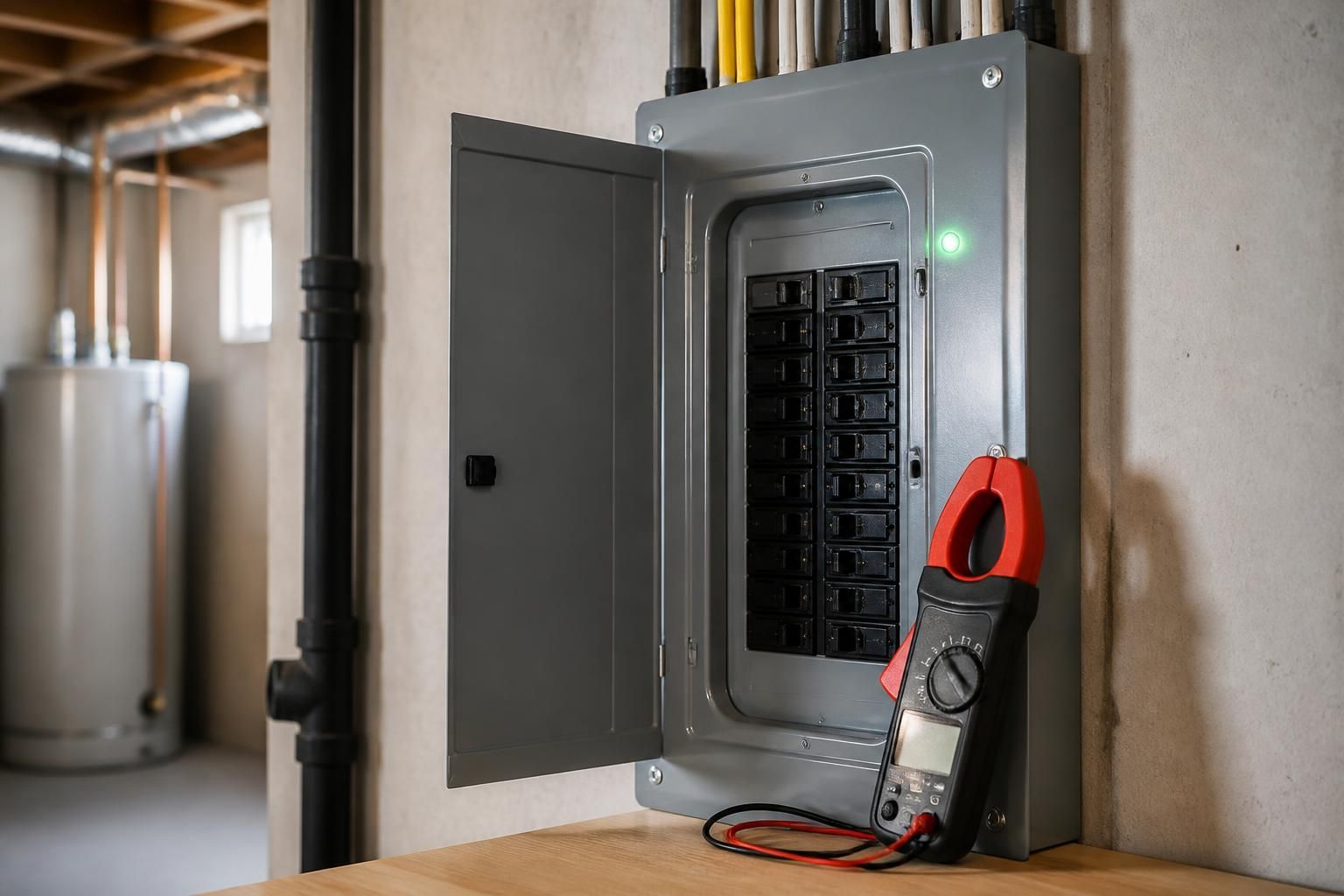
When lights flicker, breakers trip, or outlets stop responding, the problem is usually telling you something. A loose connection, worn component, overloaded circuit, or damaged wire can hide behind a small symptom until it starts interrupting daily routines. Whitney's Electric helps homeowners and businesses across Markham, IL find the source instead of guessing at it.
If you are dealing with repeated outages, strange buzzing, warm switches, or equipment that works only part of the time, we can trace the issue and explain what is happening. Electrical troubleshooting should give you answers you can use, not a quick reset and a shrug. We focus on clear diagnostics, practical next steps, and repairs that match the real condition of the system.
Electrical problems often start small. A light that dims when another appliance starts, an outlet that feels warm, or a breaker that trips more than once can point to a deeper fault. Some issues are tied to one device. Others affect a branch circuit, a panel connection, or wiring hidden behind walls.
Common symptoms we are often asked to investigate include:
These signs do not always mean the same thing, which is why a careful diagnosis matters. A symptom gives direction, but the source has to be tested.
Electrical troubleshooting is a process of narrowing down where the problem begins. At Whitney's Electric, we look at the visible condition of the affected area and then follow the circuit path until the cause becomes clear. That may include outlets, switches, fixtures, junction points, the panel, or connected equipment.
We look at how much demand is placed on the circuit, what devices are connected, and whether the circuit is carrying more than it should. Sometimes the issue is a shared load pattern. Other times it is a failing breaker or a damaged conductor that can no longer handle the demand.
Loose terminations, worn receptacles, failing switches, and damaged fixtures can all interrupt power or create intermittent problems. We check for signs that a connection is overheating, arcing, or no longer making solid contact.
When the source is not a single outlet or fixture, we move upstream through the panel and feed path. That helps us identify whether the concern is isolated or tied to a broader condition affecting the branch circuit or panel assembly.
Good diagnostics follow the evidence. We start with the symptoms you notice, then test the circuit rather than replacing parts at random. That saves time, reduces unnecessary work, and gives you a more accurate picture of what needs attention.
This approach matters because electrical symptoms can overlap. A flickering light might come from a loose fixture connection, a failing switch, or an overloaded circuit. The right fix depends on tracing the source.
Electrical issues often come from a handful of repeat conditions. Some are tied to age. Others are caused by wear, load changes, or past work that no longer meets current demand. We see these causes often when diagnosing homes and businesses across Markham, IL and nearby communities.
We also see situations where a previous repair solved one symptom but left the real source untouched. That can create repeated callbacks, especially when the issue is deeper than the visible device.
Electrical troubleshooting is not limited to one type of property. Residential systems often show symptoms at outlets, lights, ceiling fans, kitchens, bathrooms, or dedicated appliance circuits. Commercial spaces may show issues through lighting interruptions, equipment power loss, or breaker problems tied to changing occupancy and use.
Whitney's Electric handles diagnostics for both residential and commercial clients, and the approach changes based on how the system is used. A home circuit may need a focused outlet or fixture diagnosis. A business may require closer review of load balance, panel condition, and the devices tied to the affected area.
Because our background includes inspections, condition assessments, and code-focused work, we can look at the issue from both a symptom level and a system level. That helps when the problem is not obvious from a single failed device.
Sometimes diagnostics lead to a simple fix. Other times the problem is a warning that a component has reached the end of its service life or that the circuit needs to be reworked. We do not push unnecessary changes. We identify what needs correction and why it matters.
Depending on the cause, the repair may involve:
When a circuit has repeated issues, the answer is not always a reset or swap. A more complete repair may be needed so the same symptom does not keep returning.
When you call Whitney's Electric for electrical troubleshooting & diagnostics, the goal is to make the process clear from start to finish. We want you to know what we are checking, what we found, and what the system needs next.
You can expect a focused visit that includes:
For property owners who have already tried replacing bulbs, resetting breakers, or swapping devices, that information still helps. It gives context and often shortens the path to the source.
We are based in Markham, IL and serve nearby communities throughout the south suburbs and the Chicago area. That includes Blue Island, Oak Lawn, Tinley Park, Homewood, South Holland, Evergreen Park, Flossmoor, Orland Park, Matteson, Palos Park, Frankfort, and Chicago.
If you are managing a single home, a condo unit, or a business property, accurate troubleshooting can prevent guesswork and point the way to a safer, cleaner repair plan. Electrical problems are easier to address when the source is identified early.
If you need help with a circuit that keeps acting up, contact Whitney's Electric at takecharge@whitneyselectricllc.com or call +17086967988. Our hours are Monday through Saturday, 8:00 AM to 5:00 PM.
A breaker can trip because the circuit is overloaded, a device is failing, a wire is damaged, or the breaker itself is no longer reliable. The symptom points to a protection issue, but testing is needed to know which part is causing it.
Intermittent flicker can come from a loose connection, a weak switch, a failing fixture, or a circuit that is carrying changing demand. Since it is not constant, the issue often needs observation while the symptom is active.
Yes. If outlets are wired on the same circuit or share a connection point, a fault at one location can interrupt other outlets downstream. That is why we trace the circuit path during diagnostics.
Intermittent problems often point to loose connections, heat-related faults, or a device that fails only under certain conditions. These issues can be harder to spot, but they are often found through methodical testing.
Yes. A warm switch is a sign that should be checked. Heat can indicate loose wiring, overload, or a failing component, and it should not be ignored just because the switch still works.
Yes. Remodeling can reveal wiring problems, circuit limitations, or device issues that were hidden before work began. Diagnostic testing helps determine whether the existing electrical setup can support the new changes.
Get Started
Share what you need help with, whether it is a panel upgrade, lighting installation, EV charger setup, rewiring, or troubleshooting. We will review the job and help you move forward with the right solution.